
Blog: Fitting Unbreakable Glasses
Copyright © David Boettcher 2005 - 2026 all rights reserved.First published: 5 June 2025, last updated 05 June 2025.
I make additions and corrections to this web site frequently but, because they are buried somewhere on one of the pages, the changes are not very noticeable. I decided to create this blog to highlight new material.
Note that these articles also get updated, especially soon after they are posted when additional information may be added. Check the “last updated” date to see when the article was last updated.
The section below is from the page about Watch Cases.
As always, if you have any comments or questions, please don't hesitate to get in touch via my Contact Me page.
Fitting Unbreakable Glasses
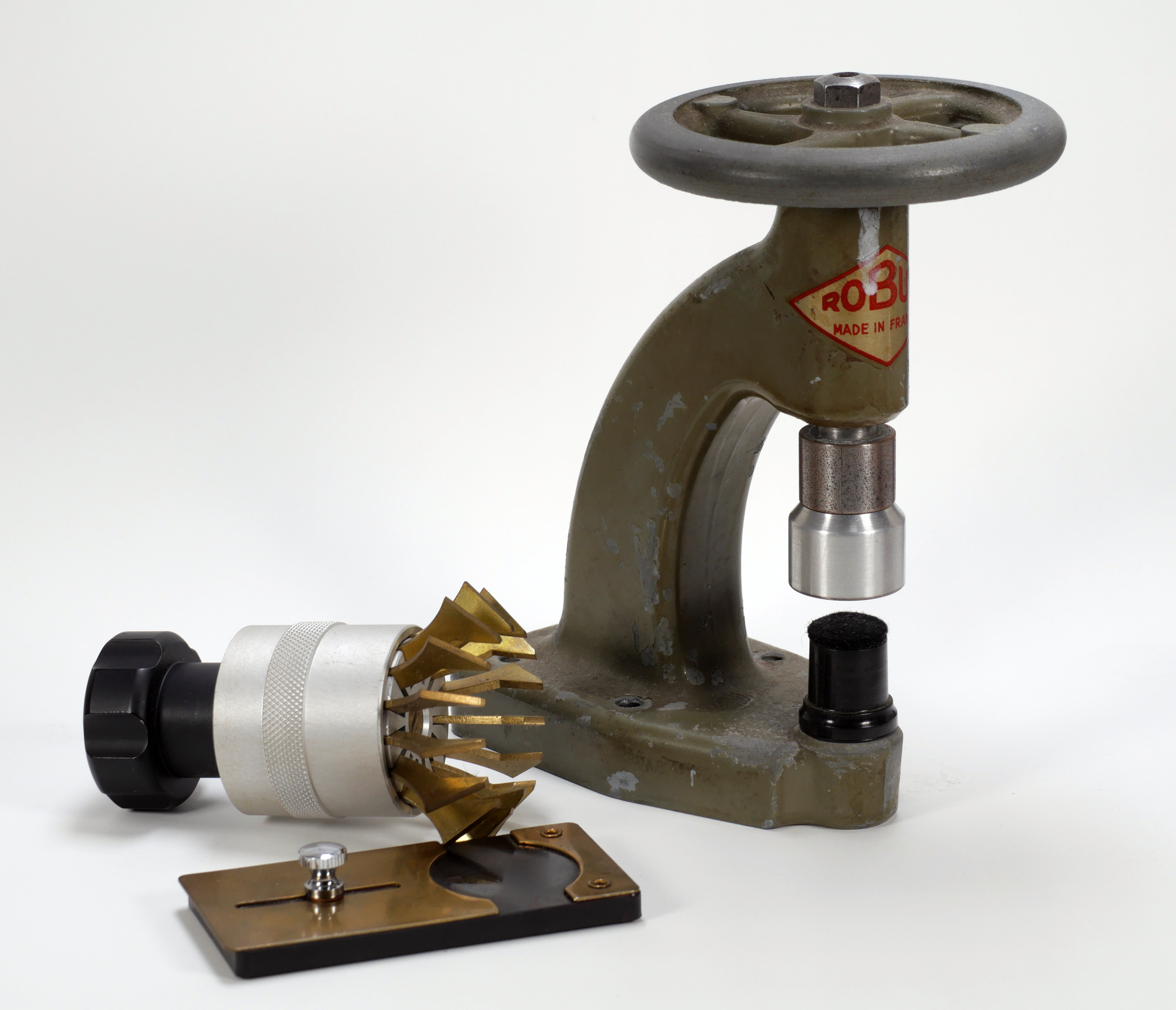
Glass Fitting Tools: Click image to enlarge
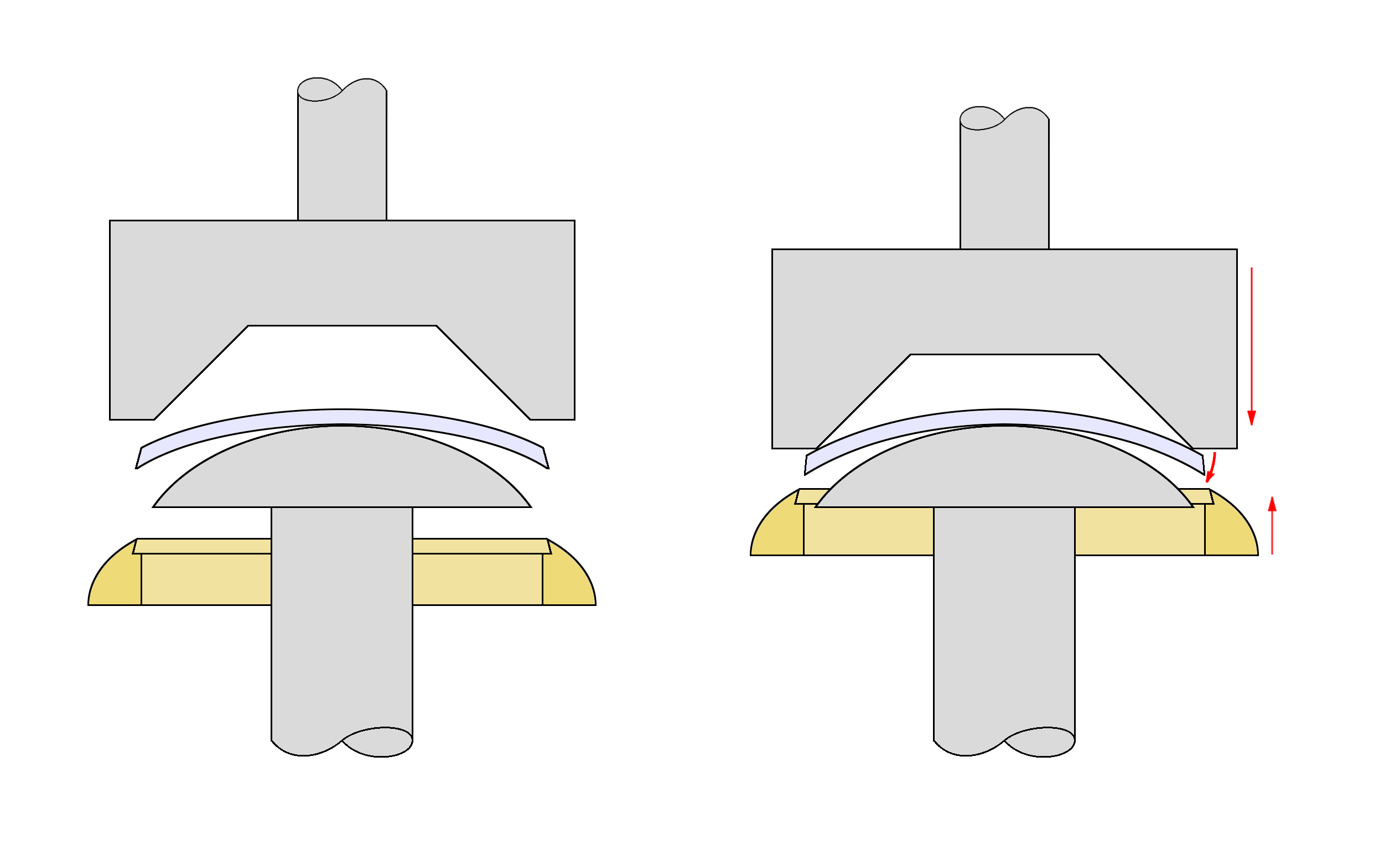
Fitting Plastic Crystal: Click image to enlarge
Unbreakable watch glasses came into use during the First World War, patented in Switzerland and America at about the same time. The first were cut from a flat plastic sheet. A flat piece of plastic material such as celluloid sheet cannot be used directly in place of mineral glass because it is not as dimensionally stable and can shrink over time or in cold weather, which could result in it falling out from the bezel.
To overcome this problem, the technique of fitting plastic glass to the bezel under tension was developed. This involves cutting out a circle of material slightly larger than the bezel with a bevelled edge, then deforming it with a press into a dome shape, allowing it to enter the bezel. When the press is released, the glass tries to flatten, and its edge springs into a groove in the bezel. The glass is sized so it does not flatten entirely and is held in the bezel by residual tension. Bliss C. Ames described this method in a US patent granted in 1915.
At some point, moulded glasses with a similar cross-section to mineral glasses became available, although it was not discovered when this was. Moulded glasses are made by injection moulding, where molten plastic is injected into a mould and takes the shape of the mould when it cools and hardens. Injection moulding was invented in the nineteenth century, but in 1919, Arthur Eichengrün advanced the technique by developing the first injection moulding press. Cellon-Werke produced a powder form of cellulose acetate that could be injection moulded. Although Cellon Werke did not make watch glasses, they would have made their customers aware of the new process and the availability of the powder to carry it out. It is possible that injection moulded unbreakable glasses were made during the war or shortly after.
The tension method described by Ames is still used today when fitting plastic glasses. The sketch shows how a plastic glass is fitted using a glass press. The glass, slightly larger, by about 0.2 millimetres, than the front opening of a bezel, is placed on an anvil, and a die is pressed down onto it to increase its curvature. This reduces the diameter of the glass until it is smaller than the front opening of the bezel. The bezel can then be lifted so that the glass enters the groove in the bezel. Withdrawing the die allows the glass to spring back towards its original curvature and fit tightly into the bezel.
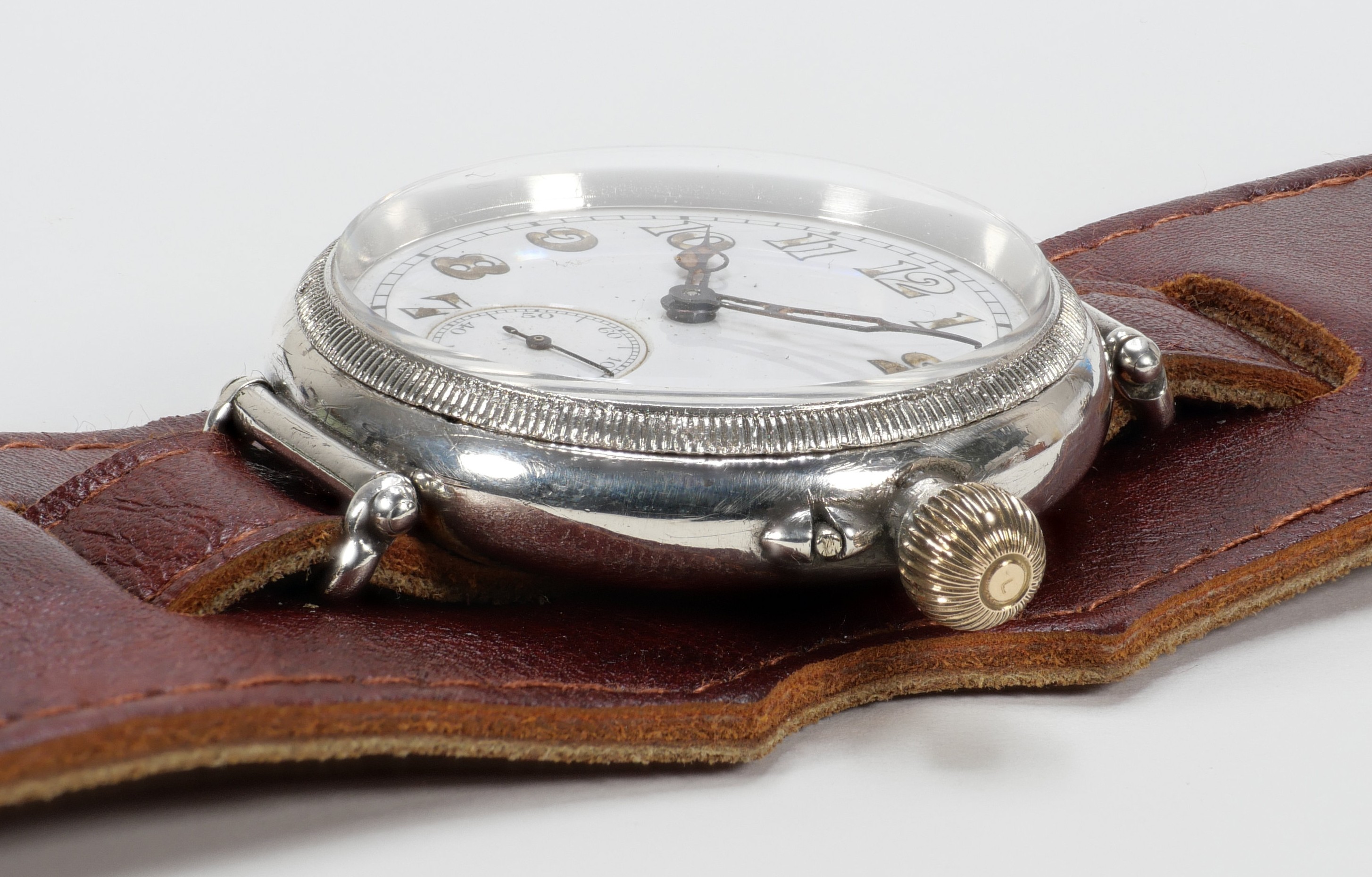
Low Dome Crystal: Click image to enlarge

High Dome Crystal: Click image to enlarge
The availability of the cheap “crystal lift” tool shown in the foreground of the glass fitting tools enables plastic glasses to be fitted without removing the bezel from the case. However, so that the tool can grip the edge of the glass, high or medium dome crystals are usually used with this tool. Because of this, wristwatches are sometimes fitted with ugly high-dome glasses.
The large clearance between a high dome crystal and the hands is rarely needed, and the appearance of watches fitted with high dome glasses can be considerably improved by fitting a low dome glass. This requires the bezel to be removed from the case and the use of a glass press such as the Robur shown in the background of Figure 22. Cheaper alternatives that look a bit like potato ricers are available, although not quite so easy to use.
If you have any comments or questions, please don't hesitate to get in touch via my Contact Me page.
Copyright © David Boettcher 2005 - 2026 all rights reserved. This page updated June 2025.
Back to the top of the page.